Immensa Editorial Team
Advanced Manufacturing Insights
6 min read
For decades, managing a spare part was largely a physical task. The part was manufactured, transported, stored in a warehouse and issued when needed. Ownership and access were relatively straightforward. If the component was sitting on your shelf, you knew where it was and who could use it.
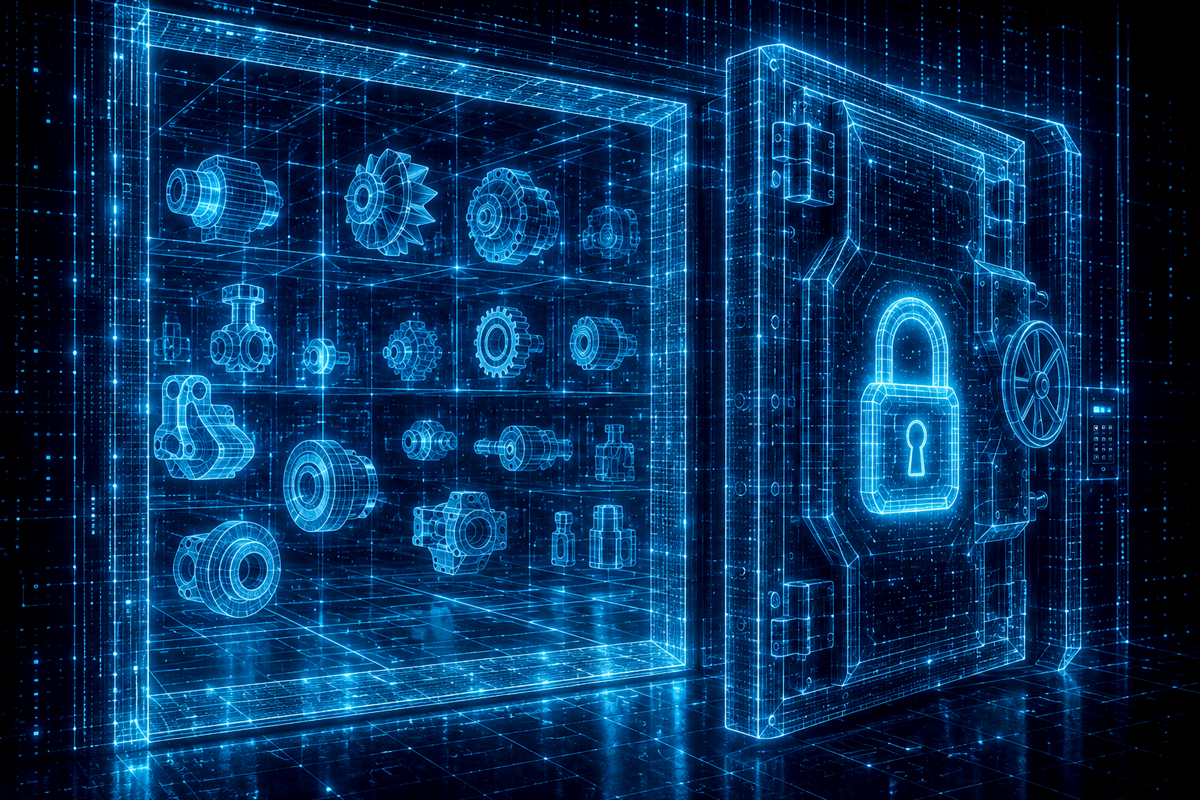
Digital spare parts introduce a different reality. When a component can be stored as manufacturing data and produced on demand, the focus shifts from managing only the physical part to managing the digital asset behind it.
Who owns that data? Who is allowed to access it? Who can manufacture from it? How do you know the correct version was used? And how can intellectual property remain protected when production takes place across a distributed manufacturing network?
These questions are becoming increasingly important as industrial companies explore digital inventories and on demand manufacturing.
A Digital Spare Part is More Than a CAD File
It is tempting to think of a digital spare part as simply a 3D model stored on a server.
In an industrial environment, it is much more than that.
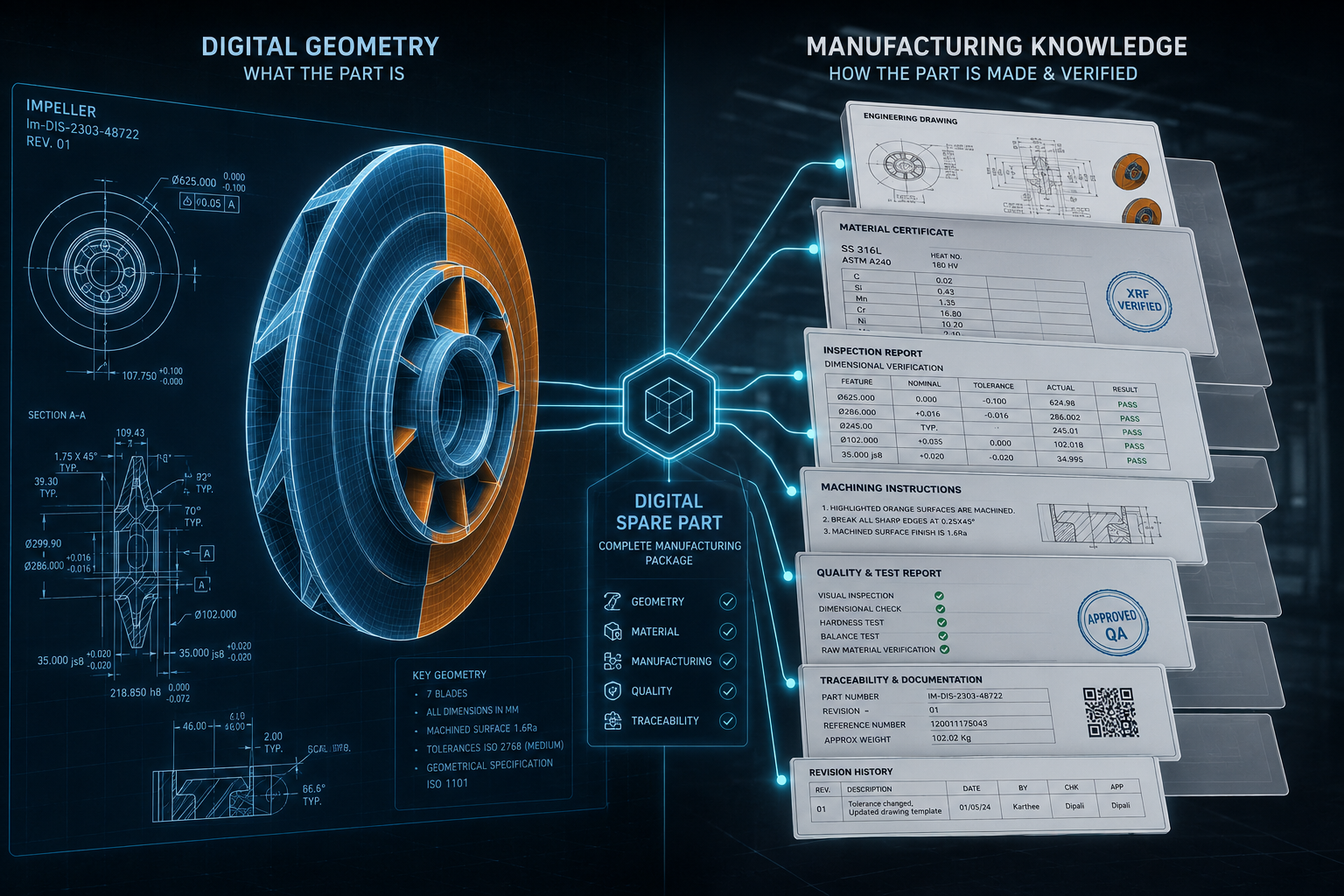
A manufacturing ready digital asset can involve geometry, material specifications, manufacturing instructions, process parameters, quality requirements, inspection information and other documentation needed to produce a component correctly.
Together, this information represents valuable industrial knowledge.
That makes the digital asset fundamentally different from a physical spare sitting in a warehouse. A physical component can be installed once. A digital manufacturing asset can potentially be used to produce the component repeatedly and, depending on how it is managed, in multiple locations.
This creates significant opportunities, but it also makes control essential.
Who Owns the Digital Spare Part?
Ownership can become complicated quickly.
An industrial operator may own the equipment, but the original equipment manufacturer may own the design. A third party may reverse engineer or redesign a component. Another company may develop the manufacturing process, while a separate facility actually produces the part.
So who owns the resulting digital asset?
There is not necessarily one universal answer.
Different parties may hold rights to different elements of the information involved. Intellectual property rights, licensing agreements, contractual arrangements and manufacturing permissions can all influence how a digital component can be stored and used.
This is why digital inventory requires more than simply collecting files.
Organizations need a clear governance framework defining who owns what, what rights have been granted, how information can be used and under what conditions manufacturing is permitted.
Without those rules, a digital inventory can become a collection of data with unclear production rights rather than a dependable industrial resource.
Access Does Not Have to Mean Unlimited Access
In a traditional supply chain, access is largely controlled by possession. A warehouse contains a certain number of parts, and established processes determine who can request and receive them.
Digital manufacturing changes this dynamic.
If manufacturing data can be transferred electronically, organizations need to control not only who can view the information, but what they can do with it.
For example, a manufacturing partner may need enough access to produce an approved component without necessarily requiring unrestricted access to all of the underlying intellectual property.
Permissions can also be designed around specific conditions, such as a particular manufacturing facility, machine, geography, time period or authorized production quantity.
This introduces an important principle for digital manufacturing:
Access to a digital part should not automatically equal ownership or unlimited manufacturing rights.
The objective is to make manufacturing information available where it is needed while maintaining control over how that information is used.
Cybersecurity Becomes Part of Manufacturing
As spare parts become digital assets, cybersecurity is no longer only an IT concern. It becomes part of the manufacturing environment.
A compromised engineering file can have consequences beyond lost data.
Unauthorized access could expose valuable intellectual property. An uncontrolled copy could potentially be distributed outside an approved network. Changes to manufacturing data could also create concerns about whether the resulting component matches the approved design and requirements.
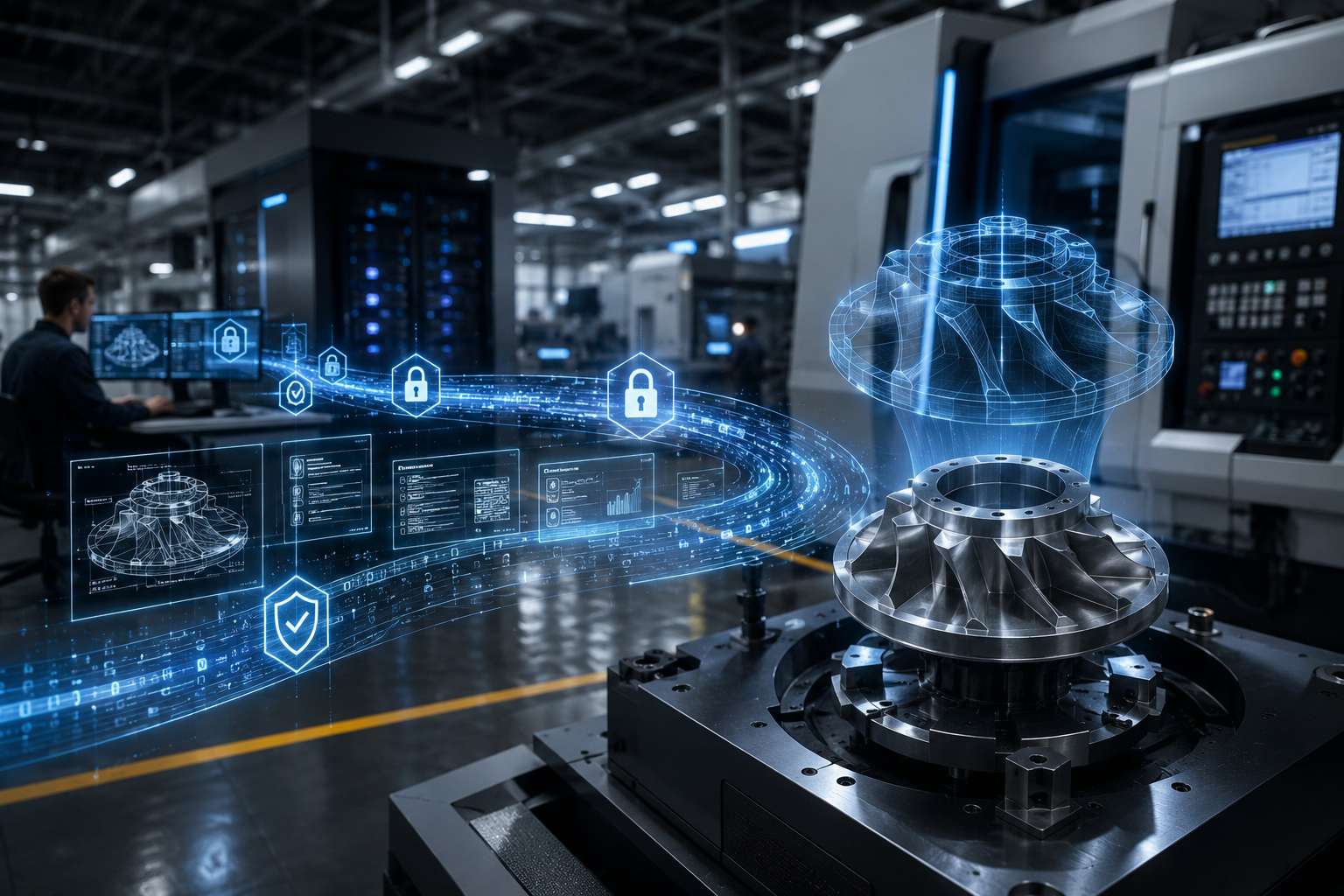
Protecting digital spare parts therefore requires security throughout their lifecycle, from initial digitization and storage to transfer, production and archiving.
Encryption, secure storage, authentication, permissions and controlled data transfer can all contribute to protecting manufacturing information.
But technical security is only one layer.
Organizations also need processes that determine who is authorized to approve, modify, release and manufacture a digital part.
The strongest digital manufacturing environments combine technology with governance.
Which Version Is the Right Version?
There is another challenge that receives less attention: version control.
Industrial components evolve. Designs may be updated, materials changed, manufacturing processes improved or qualification requirements revised.
If multiple copies of a manufacturing file exist across different systems and locations, how does a manufacturer know which one is approved?
Producing an outdated version could undermine the very benefits digital manufacturing is supposed to provide.
A well managed digital inventory therefore needs a controlled source of truth.
The organization should be able to identify the current approved version of a component, understand its revision history and ensure that manufacturing occurs only from authorized data.
This is where traceability becomes critical.
From Digital File to Physical Part and Back Again
Traceability connects the digital asset to the component that ultimately enters service.
Ideally, organizations should be able to answer fundamental questions about a digitally manufactured part.
1
Which approved digital asset was used?
3
Where was the component manufactured?
4
Through which approved process?
6
What quality documentation is associated with it?
This creates a traceable link between the digital definition of the component and its physical production.
In traditional manufacturing, companies have spent decades developing systems for quality assurance and supply chain traceability.
Digital manufacturing does not remove that requirement. It extends it into a new environment where data itself becomes part of the supply chain.
Trust Is the Foundation of Digital Inventory
The potential of digital spare parts is significant.
Companies can rethink physical inventories, enable on demand manufacturing and connect demand with qualified production capabilities closer to where components are required.
But none of this works at scale without trust.
OEMs need confidence that their intellectual property remains protected. Operators need confidence that the component they receive matches the approved requirements. Manufacturing partners need clear authorization to produce it. And every stakeholder needs confidence that the digital asset has not been altered or used outside its intended purpose.
The future of spare parts, therefore, is not simply about converting physical components into digital files.
It is about building an environment where those digital assets can be owned appropriately, accessed securely, controlled carefully and traced throughout the manufacturing process.
The Question That Matters Next
As more industrial supply chains become digital, the question will no longer be only whether a part can be produced on demand.
It will also be: who has the right to produce it, and how do we know it was produced from the right data?
Build a Digital Inventory You Can Trust
Immensa helps industrial operators qualify, secure and govern digital spare parts, so every file that enters production is owned, accessed and traced with confidence.