Fahmi AlShawwa
Chief Executive Officer
4 min read
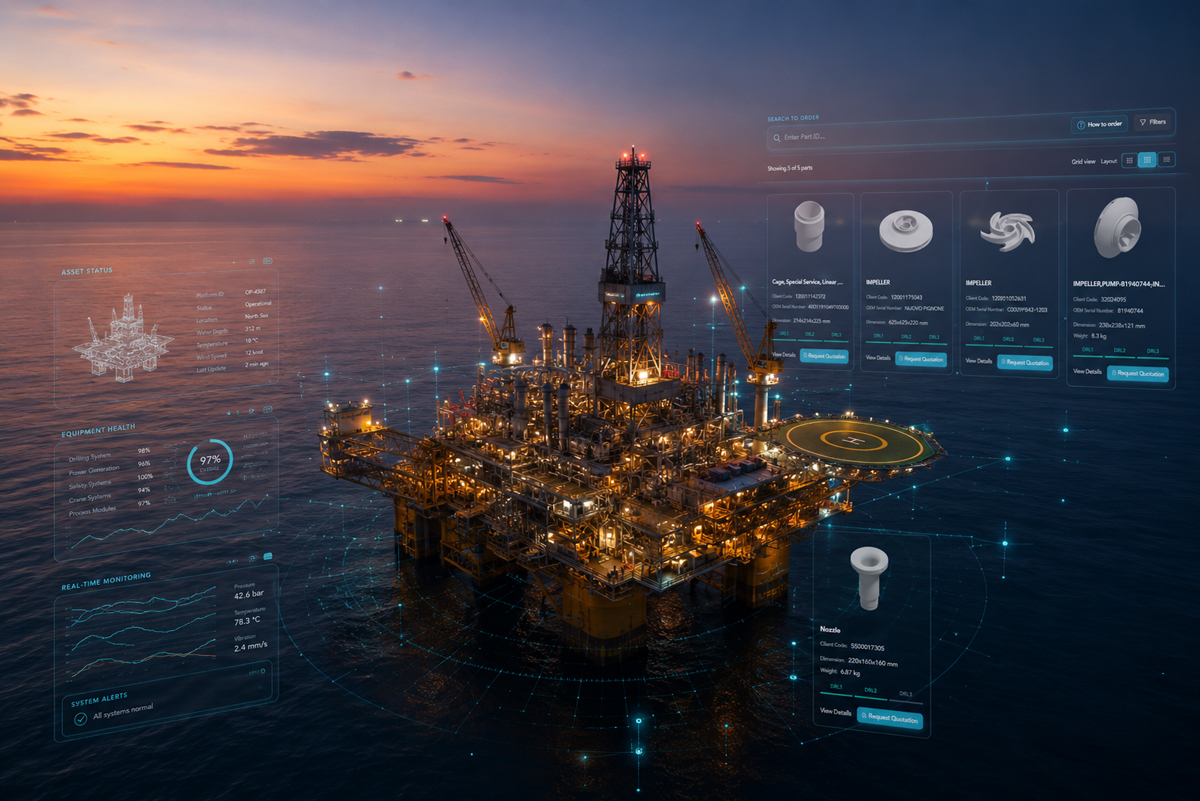
In the high stakes environment of global Energy, the difference between record breaking production and catastrophic loss often hangs on a single component. As we navigate 2026, the "spare parts" category has been elevated from a procurement line item to a critical pillar of national and corporate security. With the digital transformation market in Oil and Gas (O&G) projected to reach $56.4 billion by 2029 (at a 14.5% CAGR), the industry is moving toward a decentralized, data driven supply chain to mitigate the escalating risk of operational paralysis.
The Criticality of the "Forgotten" Supply Chain
While the industry focuses on exploration and decarbonization, the mechanical integrity of existing assets remains the primary driver of ROI. In 2026, the criticality of spare parts is defined by staggering financial and safety metrics:
$500K
Cost per hour of unplanned downtime at the upper end
27 Days
Average unplanned downtime per offshore platform each year
$88M
Potential annual bottom line impact per asset
The $500,000 per hour reality: Recent 2025 to 2026 industry benchmarks confirm that unplanned downtime for mid to large scale offshore platforms or high capacity refineries now costs between $125,000 and $500,000 per hour.
Annual operational losses: An average offshore platform experiences roughly 27 days of unplanned downtime per year, translating to a bottom line impact of $38 million to $88 million per asset.
Safety and compliance: Over 50% of Non Productive Time (NPT) in high pressure environments is attributed to the lack of Safety Critical Elements (SCE). A missing $500 seal can legally and physically halt a $2 billion asset.
Spare parts are no longer a back office concern. When one small component can idle an entire platform, availability becomes a boardroom level risk.
The Adversarial Landscape: Why the Old Model Is Failing
The traditional "Just in Time" (JIT) philosophy, built on the premise of a frictionless global market, has buckled under mid 2020s volatility.
The Lead Time Gap
Trade fragmentation and export restrictions on high performance alloys have created a massive disconnect. Components like actuators and specialized sensors that had an 8 week lead time in 2023 now face wait times of 30 to 50 weeks. This has forced a 91% shift in supply chain strategies toward "Just in Case" stockpiling or localized on demand manufacturing.
Physical and Geopolitical Chokepoints
Maritime routes essential for heavy O&G equipment are under unprecedented pressure:
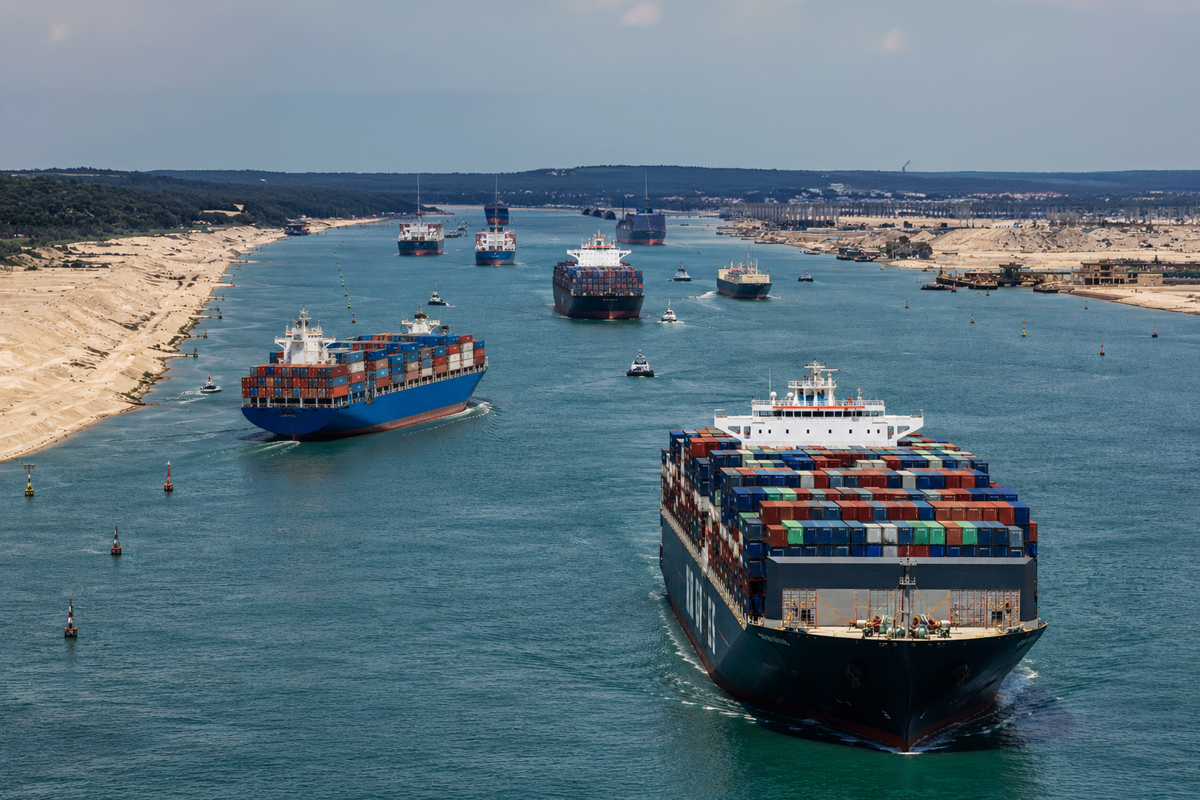
The Strait of Malacca: The conduit for 24 million barrels per day (bpd) of oil and gas also serves as the primary bottleneck for Asian manufactured electronics and specialized steel reaching the West.
Bab el Mandeb and Red Sea: Security flashpoints have forced a permanent rerouting of hardware around the Cape of Good Hope, adding 8 to 14 days to transit and causing insurance premiums to spike by up to 300% for certain zones.
Bottlenecks: Technical and Material Scarcity
The "Silver Tsunami": Over 50% of the industry's specialized workforce is reaching retirement age between 2025 and 2030. This loss of "tribal knowledge" makes maintaining legacy assets (many 25+ years old) a high risk endeavor.
Material competition: O&G is now competing with the EV and Aerospace sectors for a shrinking supply of Nickel, Titanium, and specialized polymers. Supply chain environmental risks are projected to cost the industry $120 billion in 2026 alone.
Resilience is no longer measured by how many parts sit on a shelf. It is measured by how quickly a certified digital file can become a working component.
Strategic Outlook (2026 to 2029): The Digital Pivot
The next three years will see a fundamental transition from physical stockpiling to Distributed Manufacturing.
The Rise of Digital Warehousing
The most resilient companies are moving inventory from physical shelves to the "cloud."
1
Asset Light Operations
Storing parts as Digital Twins and certified CAD files allows for immediate global transmission.
2
On Demand Manufacturing
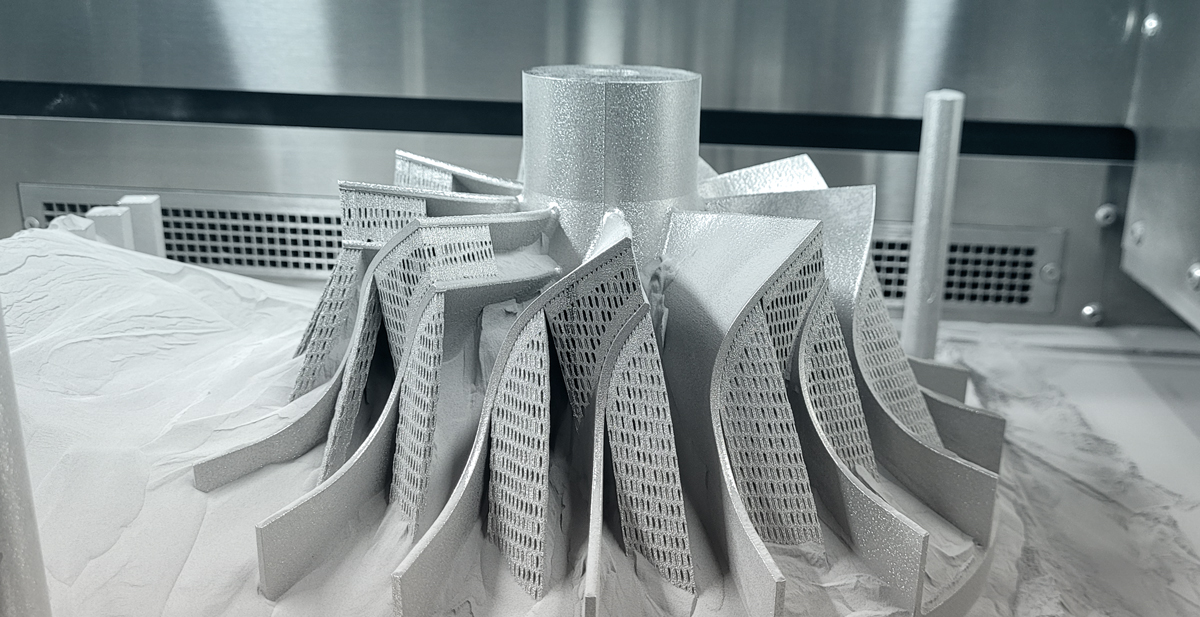
Moving "bits, not atoms" allows a digital file to be sent to a local Advanced Manufacturing Center. This slashes lead times from months to days and is expected to reduce physical inventory holdings by 15 to 20% across the sector.
3
Localization and "Friend Shoring"
A massive push toward Regional Manufacturing Hubs is underway. Companies are prioritizing local production in the GCC, North America, and India to ensure critical components are produced within stable, politically aligned corridors.
Conclusion: Resilience as a Competitive Advantage
In the 2026 to 2029 window, operational excellence is synonymous with supply chain resilience.
The companies that thrive will be those that transition from "owning the hardware" to "owning the data" to produce it.
Build a Resilient Spare Parts Supply Chain with Immensa
Immensa helps energy operators digitize spare parts inventories and manufacture certified components on demand through qualified regional production hubs. Reduce lead times from months to days and protect your operations from supply chain disruption.
Talk to Our Team